Ukraine's metallurgical output falls 80% in September after strikes on blast furnaces
The Centre for Economic Strategy says Ukraine's metallurgical output fell 80% year on year in September after Russian strikes hit seven blast furnaces at Metinvest and ArcelorMittal Kryvyi Rih. The idled plants made about 90% of the country's steel.
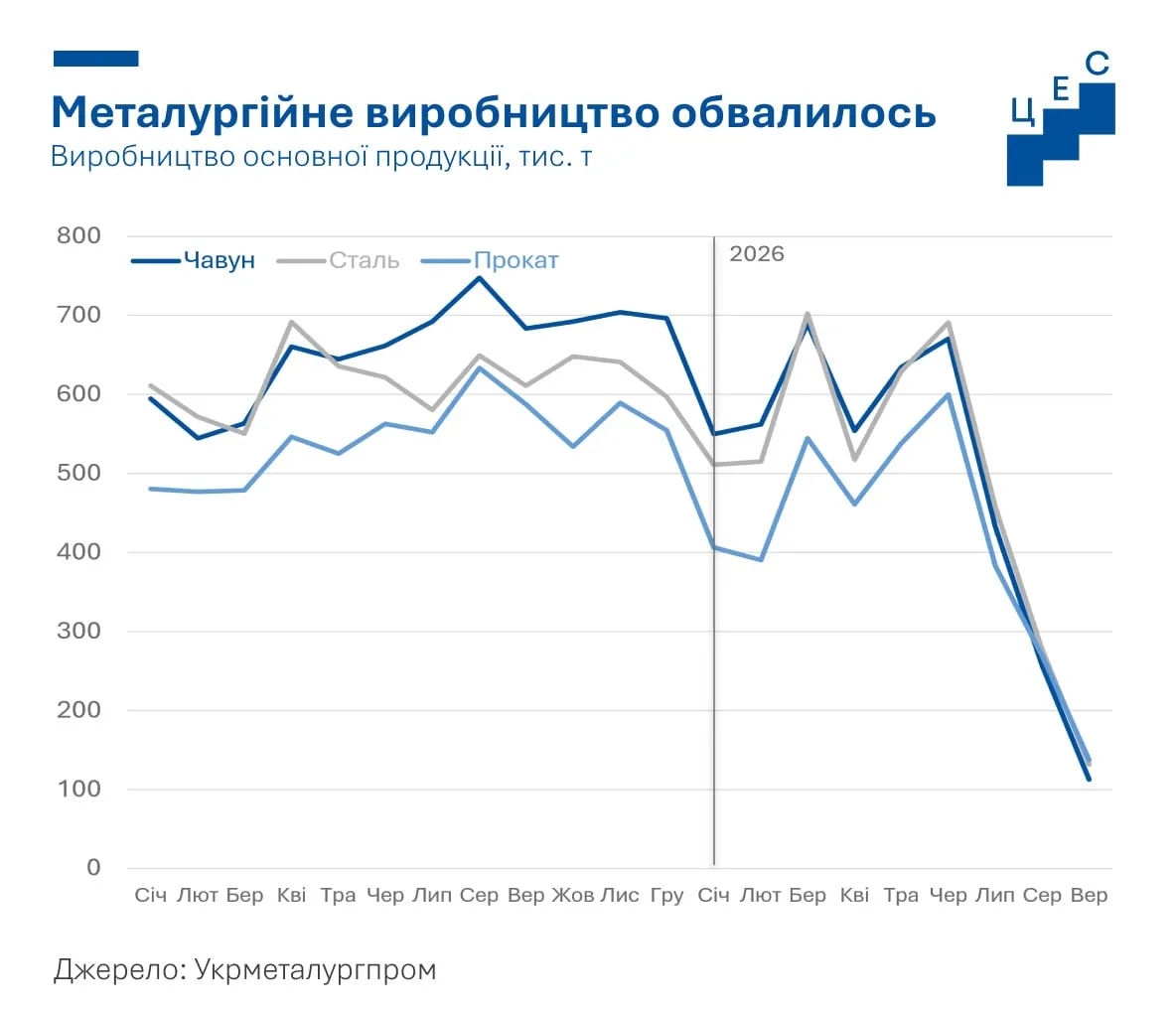
Ukraine's metallurgical output fell 80% year on year in September, according to the Centre for Economic Strategy (CES), a Kyiv-based think tank. It blames Russian strikes on blast furnaces, which it says have halted the plants that produced most of the country's steel.
Seven furnaces hit
CES says Russian attacks in September hit seven blast furnaces: five at enterprises owned by Metinvest and two at ArcelorMittal Kryvyi Rih. Together, the plants accounted for about 90% of Ukraine's steel production.
According to CES, the enterprises have stopped work and do not plan to restart during the war. The think tank's figures could not be independently verified, and the companies' own assessments of the damage were not part of the material available to RealUA.
Ore exports blocked by ports
Ukraine still has the potential to export iron ore instead of processing it at home, CES says. But the blockade of ports effectively rules out shipping it by the traditional sea routes. Switching to alternative routes would, in CES's words, be too expensive.
Pressure had been building
CES notes that the industry was already under strain before the strikes:
- EU carbon rules. Metal producers had to deal with the EU's Carbon Border Adjustment Mechanism (CBAM), which puts a carbon-related charge on certain imports, steel among them.
- Tighter EU access. From 1 July 2026, CES says, the European Union imposed tough restrictions and cut the duty-free quotas for Ukrainian metal products.
- Power cuts. Last winter, plants suffered from electricity supply disruptions.
"For them this is a very important part of the production cycle, meaning that without electricity they do not work," CES senior economist Nataliia Kolesnichenko told Deutsche Welle.
Why it matters for the economy
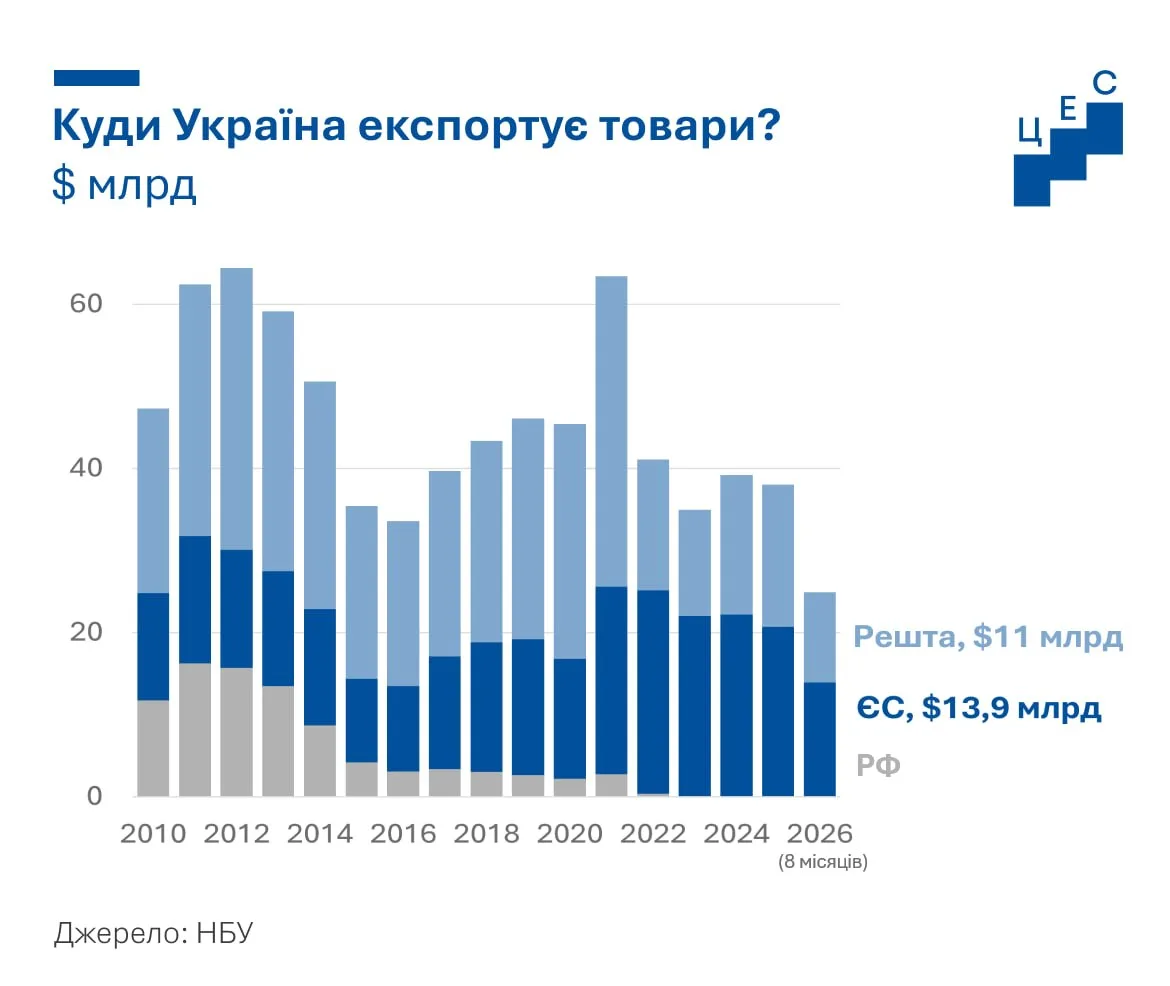
Together with related industries, metallurgy contributed more than 5% of Ukraine's GDP last year, CES says. The EU is Ukraine's largest export market: as RealUA reported on 23 October, CES estimates it takes 55–60% of goods exports, although farm products make up about 60% of those exports.
Investment firm Dragon Capital, in its October forecast, put the losses from the steel stoppage and lower ore mining at 1.5% of GDP. It now expects Ukraine's economy to contract both this year and next.
CES adds that the decline could be deeper if the plants stay idle throughout next year and nothing compensates for the lost output. It did not say what such compensation might look like.
What is not yet known
The sources do not say how long repairs would take, what the damage costs or whether the companies plan to rebuild once the fighting ends. They also do not give absolute output volumes for September or a comparison with August. The 80% figure is CES's own, and the chart that accompanied the original post comes from the think tank's economic review.