Ukrainian intelligence details Russia's new low-cost Filin cruise missile
Ukraine's military intelligence has published a 3D model and component data for the Filin, a cheap ground-launched jet cruise missile Russia began using in late summer. HUR says it relies on Chinese navigation and many foreign parts.
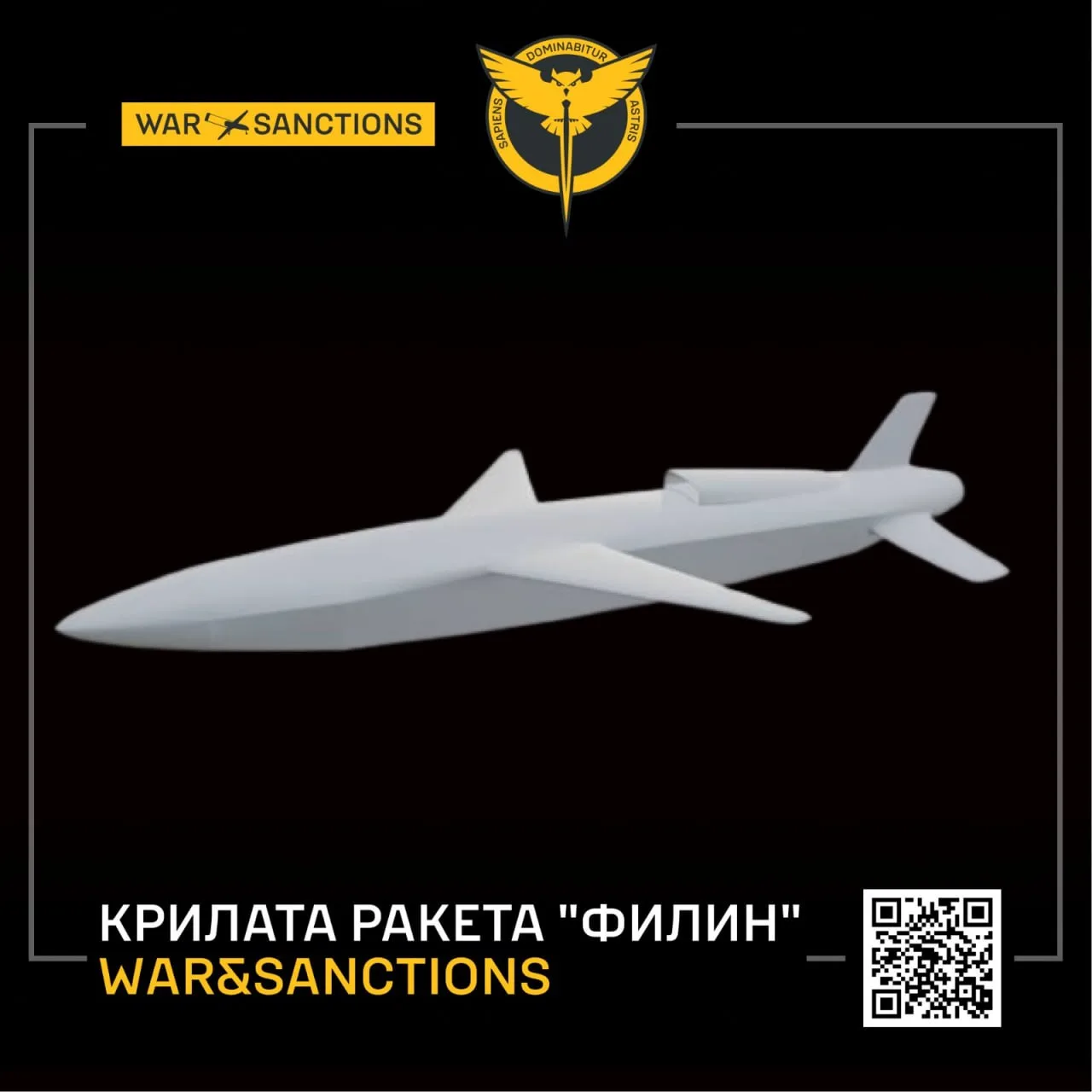
Ukraine's military intelligence service (HUR) has published an interactive 3D model, a parts breakdown and electronics data for a new Russian cruise missile called Filin (Russian for "eagle owl"), which it says Russia began using at the end of this summer.
HUR released the material on its War&Sanctions portal, which catalogues foreign-made components found in Russian weapons. The details below are HUR's own findings, and the Filin's performance figures are what HUR says Russia claims for it. None of it could be independently verified.
What HUR says about the missile
According to HUR, the Filin is made by NPO Molniya, a company within Russia's Tactical Missiles Corporation. The agency describes it as a continuation of a Russian defence-industry trend towards cheap, jet-powered air-attack weapons launched from the ground.
Key specifications listed by HUR:
- Airframe: composite fuselage made of carbon fibre and fibreglass, 3.5 metres long, with a 3-metre wingspan. Some parts are 3D-printed.
- Speed and range: a claimed maximum speed of 800 km/h and range of up to 1,200 km. HUR attributes these figures to the Russian side.
- Flight profile: it can fly at ultra-low altitudes and up to 6 km.
- Warhead: versions exist with 50 kg and 100 kg warheads.
- Launch: from a ground-based launcher, using a powder (solid-propellant) booster.
Shared maker with Harpiya drones
HUR says the missile's onboard equipment is made by a company called PLAZ. The same firm, it says, is involved in producing the Harpiya, a variant of the Iranian-designed Geran-2 attack drone (Russia's version of the Shahed). HUR lists Harpiya series K, KB and KC, built by the Kupol plant in Izhevsk. In the post, the agency says the Filin and Harpiya units have a similar layout and markings.
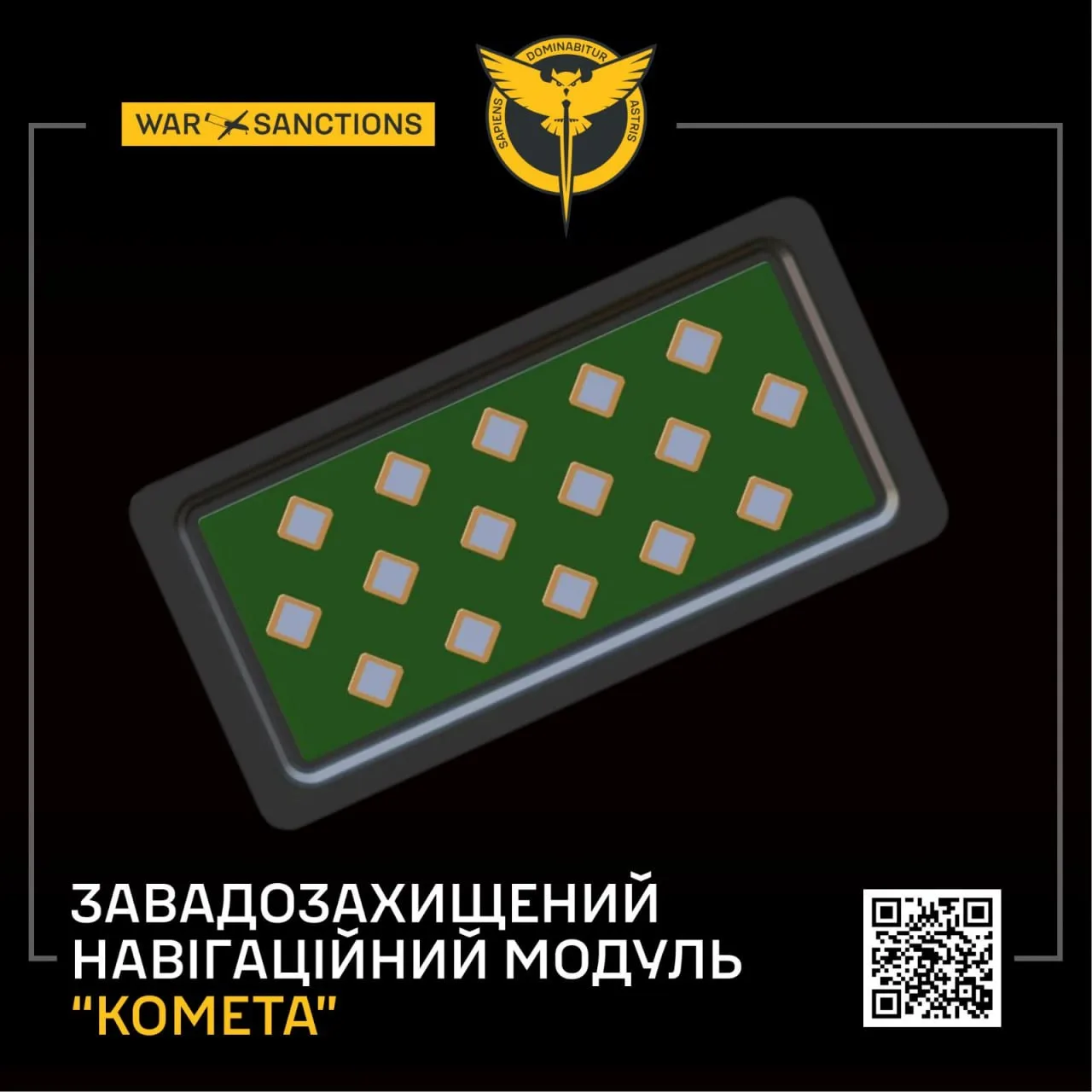
For guidance, HUR says the Filin uses a Chinese-made inertial navigation system, which tracks position from onboard motion sensors without outside signals. It also uses a 16-channel Kometa module. Kometa is the Russian satellite-navigation unit designed to resist jamming. RealUA reported on 19 October that HUR had separately listed 37 foreign electronic components tied to Kometa modules.
Foreign parts, Russian engine
HUR says the electronics are similar to those in other Russian missiles and drones. It notes a larger share of Chinese components: 35 American and 22 Chinese parts were identified. It also says the designers used common solutions across different units and circuit boards.
The engine, however, is Russian. HUR identifies it as the R500, made by a company named Reynolds. It says a similar engine was previously found in the S-71K Kover and S-71M Monochrome air-launched cruise missiles.
Why it matters
Cheap cruise missiles that fly low and are launched from the ground add to the mix of weapons Ukrainian air defences face alongside Shahed-type drones and ballistic missiles. HUR's component data also feeds Ukraine's push for tighter sanctions and export controls. In October, it published similar breakdowns of the Kh-47M2 Kinzhal missile and its suppliers.
HUR did not say how many Filin missiles have been launched, what they have hit, or how the data were obtained. It said it continues "systematic work" studying new Russian weapons.