Ukraine opens two more EU accession clusters in Luxembourg, shifting talks to economics
EU accession talks with Ukraine were formally opened on two more clusters, covering the internal market and competitiveness, on 13 October in Luxembourg. A Kyiv think tank says the talks now turn to practical, economic questions.
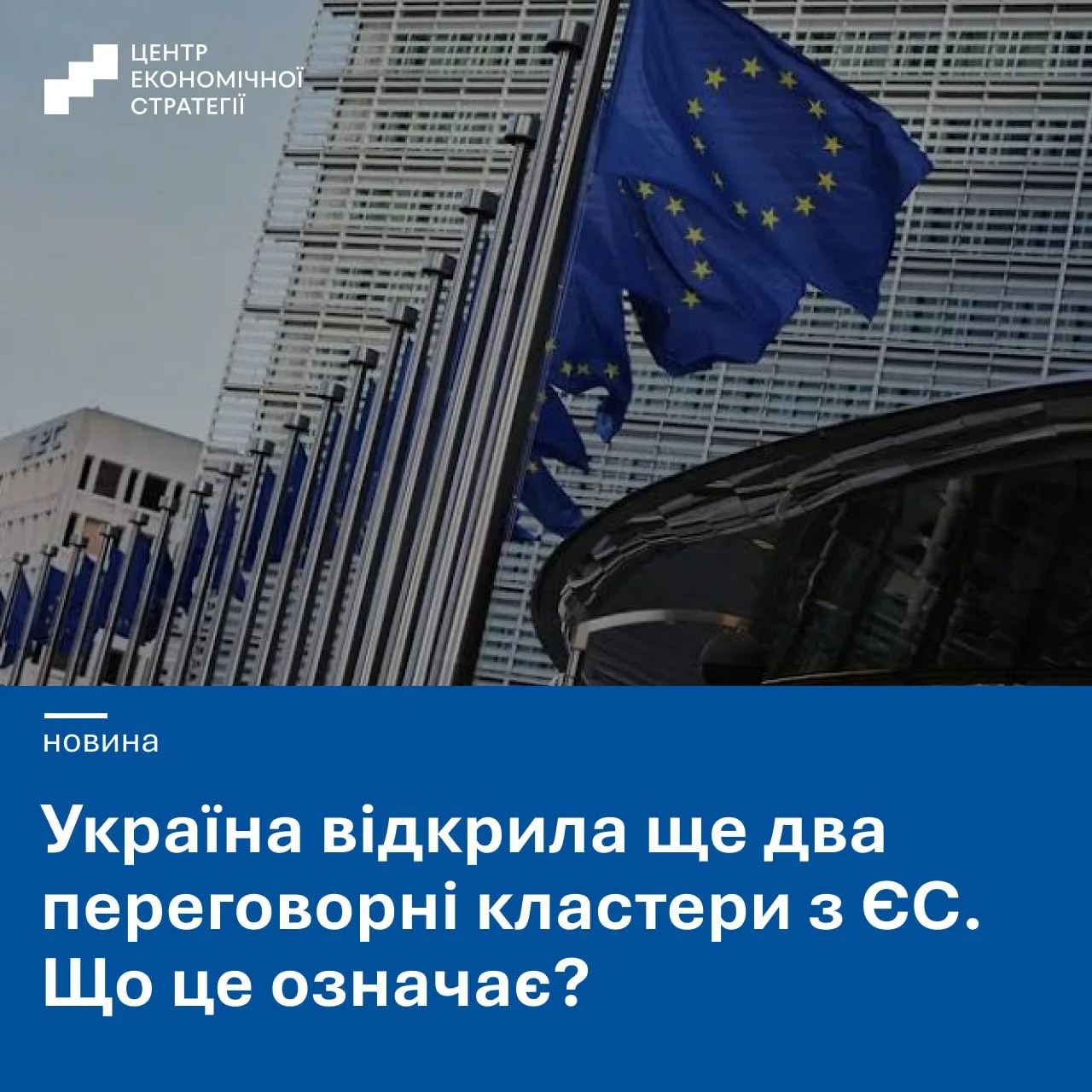
Ukraine and the European Union formally opened accession negotiations on two more clusters on 13 October in Luxembourg, according to the Centre for Economic Strategy (CES), a Kyiv-based think tank. The two clusters deal mainly with Ukraine's economic integration into the bloc.
The CES announced the step on its Telegram channel on 15 October. This report relies on that post. It does not include an official statement from Kyiv or Brussels, and the post does not say who represented each side at the meeting.
What the two clusters cover
- Cluster 2, "Internal Market": free movement of goods, services, capital and workers; competition; financial services; company law; and consumer and intellectual property protection.
- Cluster 3, "Competitiveness and Inclusive Growth": taxation, economic and monetary policy, industry, digitalisation, social policy and employment, education, science and the customs union.
"The most interesting part begins"
CES senior economist Yana Okhrimenko said the opening of the clusters "means a partial shift of the negotiations from the political to the practical, economic plane."
"The most interesting part begins: assessing the consequences, justifying the need for transitional periods, discussing the terms of integration," she said. "All the difficult questions were foreseeable, but now they have taken concrete shape and become our agenda."
Issues the CES highlights
The think tank pointed to several topics it has covered in earlier research:
- Free movement of workers. The EU foresees possible temporary limits on Ukrainian workers' access to member states' labour markets after accession. The terms will be set later. The CES notes that the EU has used such transitional restrictions before, but says Ukraine's case is different because millions of Ukrainians already live in the EU and many of them work there.
- Land market. Ukraine is asking for a transitional period before EU citizens are allowed to buy agricultural land. According to the CES, the EU has not yet agreed to it. The think tank adds that capital mobility is a genuine membership requirement, but that most of the "newer" member states still maintain what it calls hidden restrictions on foreigners buying land.
- Financial sector. Ukraine is asking for three years to raise guaranteed deposit compensation gradually to €100,000. The EU wants further justification, the CES says.
- Taxes. One of the EU's conditions is that VAT, excise duties and the simplified taxation system be brought into line with European rules.
Background
Under the EU's enlargement methodology, negotiating chapters are grouped into thematic clusters. Opening a cluster starts detailed talks on those policy areas, in which the candidate country aligns its legislation with EU law and the two sides settle any transitional arrangements. Ukraine received EU candidate status in June 2022, and the EU formally opened accession negotiations with it in June 2024.
On 14 October, RealUA reported that President Volodymyr Zelensky had said two accession clusters were due to open that week. The CES post is the first account in our coverage that confirms the opening and describes what the two clusters cover.
What happens next
The post does not give a timetable. Transitional periods on labour access, land purchases and deposit guarantees are still open issues to be negotiated. Ukraine's final terms on these have not been published in the source material.