Zelensky: US lifted intelligence and Starlink limits, but air defence still short
Zelensky says two of three problems raised with the US in Oslo, intelligence sharing and Starlink/Starshield limits, are lifted for now. Patriot missile supplies, he says, are moving "slower than the flight of Russian missiles".
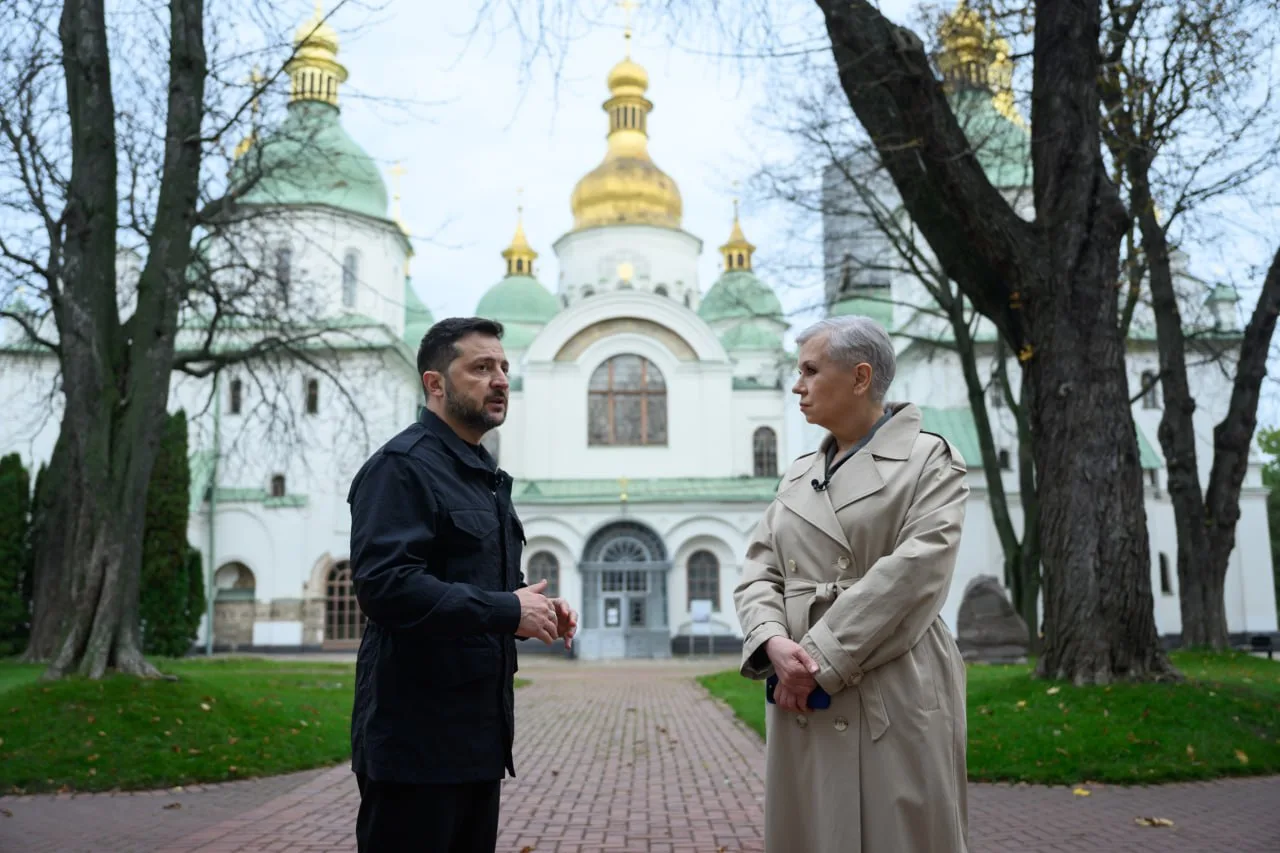
President Volodymyr Zelensky says two of the three problems Ukraine raised with the United States in Oslo have been resolved for now. They are Washington's limits on sharing intelligence and the restrictions on Starlink and Starshield satellite services. The shortage of air defence remains, he said.
Zelensky made the comments in an interview with Alla Mazur for the TSN news programme on the 1+1 channel and the "United News" telethon. He published the first of five excerpts on his Telegram channel on 25 October. The claims are his own. The source material contains no confirmation or comment from the US side.
What Zelensky said
Zelensky said the conversation with the Americans in Oslo "was accompanied by three challenges": the air-defence shortage, the Starlink/Starshield restrictions and the limits on US intelligence sharing.
"I am grateful to the Americans and to our team that two issues, on intelligence and on Starlink/Starshield, have been lifted as of today," he said.
He said air defence is still the open issue. There is "progress" on missiles for Patriot systems, he said, "but they are very slow. They are slower than the flight of Russian missiles."
Zelensky added: "You can't say 'Yes, we will give you' and then not give for a month or two. It simply doesn't work that way."
The post does not say what the intelligence restrictions were, when they took effect or how they were lifted. It gives no figures for Patriot deliveries and does not say which US officials were involved. Zelensky did not say whether "lifted as of today" means the changes are permanent.
Background
RealUA reported that Zelensky arrived in Norway on 20 October for talks in Oslo, including a meeting with US envoy Steve Witkoff, Norwegian Prime Minister Jonas Gahr Støre and Finnish President Alexander Stubb. On 21 October, after meeting Støre, he said he expected new defence support packages the following month.
The Starlink and Starshield question has changed several times in recent days. Starshield is the military version of SpaceX's Starlink satellite internet. Defence Ministry sources told Ukrainska Pravda that the service was restricted on 14 October. Ukrainian communications expert Serhii "Flash" Beskrestnov later said a 160 km/h speed cap was still in force and was affecting data feeds to combat helicopters. US Representative Brian Fitzpatrick called for a congressional probe into the restrictions. Who ordered them has not been confirmed.
On 23 October Zelensky said the speed limits still applied. The next morning the Defence Ministry said its monitoring showed speeds restored, with stable links above 400 km/h. Zelensky later said speeds were back to pre-restriction levels after tests. Beskrestnov also said the restriction had been resolved. The latest remarks put the issue in the context of the Oslo talks.
Air defence has been a recurring concern. In an earlier Bloomberg interview, Zelensky said Ukraine now gets 12 Patriot missiles a month, four times fewer than before. On 19 October he said he met a Lockheed Martin team in Kyiv about more ballistic-missile interceptors. No contracts or quantities were announced. Russia has also fired large numbers of ballistic missiles at Kyiv in recent weeks. Zelensky has said Ukraine received no warning from partners before some of those attacks.
What happens next
Zelensky has said a Ukraine–US–Russia meeting at team level is planned for the first half of November, and that it depends on Russia. The Kremlin has said it is ready to resume trilateral talks that month. The remaining four parts of the TSN interview are due to be published.